Saturday, June 29, 2013

The Dang Drain is Clogged

I went to a neighborhood picnic tonight.  It was great, but when I got home to clean up, the sink backed up--almost up to the level with my clean dishes.  Really gross!

It was late, but who wants to deal with disgustingness in the morning?  Not me.  I knew my old standby of baking soda and vinegar followed by boiling water was not going to do the trick alone.  And there is NO WAY I'm going to use the commercial drain opener that can actually cause blindness if you get it in your eyes.

So, I remembered my landlord using a trick with a plunger in the sink.  (And I googled it to make sure I knew what I was doing.  See WikiHow.)  I have a double sink, so I checked which sink seemed to be the problem by poking a wooden skewer down each drain.  The one on the right was just fine, but the one on the left was clearly plugged up badly which called for drastic measures.

I put the drain plug into the right sink (wearing rubber gloves--really nasty water), then I used the plunger on the left sink.  The plug in the right sink still let water come up as the seal must not be very tight.  It took a couple tries, but I did get the left sink to drain properly.  I followed this with a dump of baking soda down the drain, followed by the vinegar to create a lovely volcano effect.  I left this for 5-10 minutes and followed up with a boiling water chaser.

My sink is just fine, thank you very much--without using something toxic and absolutely dangerous off the grocery store shelves.

NOTE; That is not an electrical cord in the photo, it's for my water filter which is NOT electric.  Just didn't want you to think I was playing with electricity in the water as my co-worker pointed out!


Water back-up in double sinks
Stick test to determine which sink is clogged
Using plunger in hot water in left sink
Adding baking soda


Adding vinegar after baking soda
Still foaming after several minutes


Saturday, May 25, 2013

May is Asthma Awareness Month

There are many irritants and triggers to asthma.  And since it is Asthma Awareness Month, I thought I'd point out another reason to switch to non-toxic household cleaners.  Below are a list of irritants from the U.S.  EPA.
  • Secondhand Smoke
  • Dust Mites
  • Mold
  • Cockroaches and Pests
  • Pets
  • Nitrogen Dioxide (gas cooking stoves, space heaters)
  • Outdoor Air Pollution
  • Wood Smoke
  • Chemicals such as Household Cleaners

About Chemical Irritants and Asthma from the U.S.  EPA

Chemical irritants are found in some products in your house and may trigger asthma. Your asthma or your child's asthma may be worse around products such as cleaners, paints, adhesives, pesticides, cosmetics or air fresheners. Chemical irritants are also present in schools and can be found in commonly used cleaning supplies and educational kits.

Chemical irritants may exacerbate asthma. At sufficient concentrations in the air, many products can trigger a reaction.

Actions You Can Take

If you find that your asthma or your child's asthma gets worse when you use a certain product, consider trying different products.

If you must use a product, then you should:
  • Make sure your child is not around.
  • Open windows or doors, or use an exhaust fan.
  • Always follow the instructions on the product label.
  • Use a nontoxic product from the store or make your own.  See the recipes page.

Thursday, March 14, 2013

Money Down the Drain

Buying commercial cleaners is not only adding toxins to your home, it's throwing money down the drain.

The cost of cleaning can be just pennies.  Nontoxic ingredients are cheap, cheap, cheap...and they work just as well as the smelly, toxic cleaners in the store.  Vinegar, baking soda, and liquid soap do not have frightening labels telling you how to call the poison control center. 

Think about what you're buying when you purchase a commercial cleaner:
  • Advertising and Marketing - The companies must convince the masses that the product is essential for a clean home.  New, improved, will rev up your sex life, make your neighbors jealous...
  • Chemical Engineering - Someone has to figure out how to make ammonia smell like a tropical rain forest--and make it a lovely green color!
  • Packaging, Shipping, and Shelf Space - OK, the nontoxic ingredients have the same issues, but I don't think the vinegar companies go to quite so much effort as the drain cleaners in their packaging designs.

What's the Difference in Cost of Typical Cleaning Products Versus Nontoxic Cleaners?

Using simple math (the kind I'm best at), I've calculated the comparable costs of nontoxic cleaners versus store-bought toxic cleaners.  Check it out!  (And hey, those are rounding errors--not my fault!)  Want to save some money and have a clean, nontoxic home?  Make your own cleaners....  (See the Recipes page)

Glass Cleaner - Windex Original costs $3.69 for 26 ounces or $0.14/ounce versus a nontoxic homemade cleaner costs $0.52 for 26 ounces or $0.02/ounce.  That's 86% cheaper.

All-Purpose Cleaner - Simple Green (boo, hiss! Greenwashing at its worst) costs $3.79 for 22 ounces or $0.17 an ounce versus a nontoxic homemade cleaner at $0.44 for 22 ounces or $0.02 an ounce.  That's 96% cheaper.

Abrasive Powder - Comet costs $0.75 for 14 ounces or $0.05 an ounce versus baking soda at $1.69 for 14 ounces or $0.12 an ounce.  OK, OK, this is one that's cheaper to buy the commercial brand, but you already have baking soda in the cupboard--and if you bought baking soda in bulk it would cost less than what I've calculated.  That's 25% more expensive for the box type of baking soda.

Abrasive Scrub - Soft Scrub costs $3.49 for 24 ounces or $0.15 an ounce versus a nontoxic homemade cleaner at $2.64 for 24 ounces or $0.11 an ounce.  That's 15% cheaper.

Toilet Bowl Cleaner - Lysol Toilet Bowl Cleaner costs $2.69 for 24 ounces or $0.11 an ounce versus $0.48 for 24 ounces of white vinegar or $0.02 an ounce.  That's 96% cheaper.

Drain Opener - Liquid Plumber costs $3.99 for 32 ounces or $0.12 an ounce.  A vinegar and baking soda cleanse costs $0.30 for one application to keep your drain clean or $0.04 an ounce.  That's 93% cheaper.


So, if reading the tiny print on the commercial cleaners doesn't make your palms sweat, then maybe saving some cash will get you to convert to simple, nontoxic cleaning.  That can be 100% safer!


Wednesday, March 6, 2013

Second-Hand Smoke and Pets

I have heard a lot about second-hand smoke and its impact on humans; but I hadn't heard anything about the impact on pets.

Recently, I went to visit a friend for several days (we'll call her "Lily").  We hadn't seen each other in 20 years so Lily reminded me that she smokes.  I thought, "no big deal, she doesn't smoke in the side of the house where I'll sleep."  And it wasn't that big of a deal because I was mentally prepared, but it did remind me how much I hate smoking.  The smoke travels around the house, and I would wake up with a smoke taste on the roof of my mouth.  And I always knew when Lily lit up even if I was at the opposite side of the house.

Lily isn't just a smoker.  She's a million other wonderful things.  She's kind-hearted to an extreme, and she rescues animals that otherwise might be put down or die from exposure.  She has 10 cats, two dogs, and a rabbit between two homes.  The stories about their previous lives make me want to cry, and I'm so grateful for people like Lily.  One cat had been shot in the face, and Lily made sure he had all the care he needed to recover as much as possible.  He's now a pretty robust cat--loving and playful.

There were seven cats in the house where I stayed, and I absolutely fell in love with one cat named Ginger Snap.  She's a Siamese kitty with a heart of gold.  Unfortunately Ginger Snap has allergies and trouble breathing sometimes.  It's heartbreaking when she has a sneezing jag.  Ginger Snap was an abandoned or lost kitten that scratched on a motel door when Lily was traveling.  She looked for the owner, but no one seemed to know anything about this kitty.  Ginger Snap has been with my friend for about 8 years now.  This kitty has been on several medications and is now on two--one for allergies and one for high blood pressure. 

Aside from Ginger Snap, a couple other kitties there have more minor wheezing or sneezing.  I thought, this can't be a coincidence.  The smoking is so irritating to my respiratory system, I wondered what could it be doing to small animals who are subjected to it for several hours a day.

According to several sources such as Petside, Science Daily, Petfinder, ASPCA, and the American Journal of Epidemiology, there is a definite link between a pet's health and its exposure to secondhand smoke.  There are 4,000 chemicals in secondhand smoke, and 43 are known to cause cancer.

Breathe New Hampshire cites the following impacts of secondhand smoke to pets: 
  • Cats exposed to secondhand smoke in the home have a higher rate of an oral cancer called squamous cell carcinoma, which may be due to the way cats groom themselves. When cats groom themselves they eat the poisons from secondhand smoke that have settled on their fur.
  • Cats exposed to secondhand smoke have a higher rate of feline lymphoma, a deadly form of cancer, than cats not exposed to secondhand smoke.
  • Cats can develop respiratory problems, lung inflammation, and asthma as a result of secondhand smoke.
  • Dogs that inhale secondhand smoke are three times more likely to develop lung or nasal cancer than dogs living in smoke-free homes.
  • Dogs can experience allergic reactions to secondhand smoke.  Common symptoms of this allergic reaction are the scratching, biting, and chewing of their skin. Owners often confuse this reaction with fleas or food allergies.
  • Cigarette butts can also be deadly. Two butts, if eaten by a puppy, can cause death in a relatively short period of time.
  • Birds can react badly to secondhand smoke and may develop eye problems, as well as other respiratory problems like coughing and wheezing.
  • Birds that sit on a smoker’s hand can experience contact dermatitis from the nicotine that remains on the smoker’s hand. This can cause them to pull out their feathers.

What Can You Do If You Smoke and Have Pets?


You can quit smoking.  I know this is a tall order.  I am a nonsmoker so I don't fully comprehend the difficulty of quitting smoking.  My Dad quit after a few decades of smoking.  He was hypnotized once, but I think he just really wanted to quit.  My co-worker quit by using nicotine gum, but he's been chewing this type of gum for years now--a better addiction, I guess.  And my niece quit for vanity--she noticed a wrinkle on her face she felt was caused by the cigarette smoke since we know a few women who smoke and their faces look ravaged.

Well, if you can't quit for your own health, maybe considering your innocent pets as well as the humans that live with you might help you to give quitting a good try.  If you fail, don't stop trying.  The road to change is not a straight line.

You could also only smoke out of doors so you're not contaminating the air, furniture, curtains, and carpeting in your home as well as your pet's fur and respiratory system.  Your pets will thank you for it--and it will reduce your vet bills.

Photo source for smoker

Thursday, January 10, 2013

What's BPA and What's it Doing in My Food?

Why would we want to eat something called Bisphenol A (BPA)?  I don't think we do.

BPA is an industrial chemical that has been used in plastics and epoxy since the 1960s.  There is a lot of controversy about this chemical which is commonly used in food and beverage containers (including the lining in most food cans).  Many studies show that BPA can seep into our food and beverages, and then into our bodies.

In 2008, the Natural Resources Defense Council petitioned the U.S. Food & Drug Administration (FDA) to eliminate BPA from all food packaging. When the agency failed to respond, NRDC sued in 2011 to make FDA respond. The court made the determination that the FDA must make a final decision on NRDC’s petition by March 31, 2012.  The FDA finally responded that they need to continue evaluating research.


According to the NRDC, "the FDA acknowledged in 2010 that it had “some concerns” about the chemical’s effects on the brain, behavior, and prostate glands in fetuses, infants, and young children. But the agency has only encouraged voluntary actions to reduce BPA exposure.  Since that time numerous studies have raised additional concerns about links between BPA and breast cancer, cardiovascular disease, diabetes and obesity.

"Consumer demand for BPA-free products has already led to the withdrawal of baby bottles, “sippy cups’’ and infant formula containers containing the chemical from store shelves.  Canada, the European Union, China, and at least five other countries as well as 11 U.S. states, all have prohibited the use of BPA in children’s products.

"In addition, some U.S. canned food manufacturers are voluntarily removing BPA from can linings, but BPA remains legal to use in all food packaging."

According to the Environmental Working Group (EWG), "certain plastics called polycarbonates leach low levels of BPA into food or liquids. Leaching from plastic baby bottles and food containers appears to happen at a much lower level than found in canned foods and baby formula. Nevertheless it is good to take simple precautions.

"BPA is found in polycarbonate plastic food containers often marked on the bottom with the letters "PC" recycling label #7. Not all #7 labeled products are polycarbonate but this is a reasonable guideline for a category of plastics to avoid. Polycarbonate plastics are rigid and transparent and used for sippy cups, baby bottles, food storage, and water bottles. Some polycarbonate water bottles are marketed as 'non-leaching' for minimizing plastic taste or odor, however there is still a possibility that trace amounts of BPA will migrate from these containers, particularly if used to heat liquids."

Is this not enough?  BPA is used in making store receipts.  The EWG reported in 2010 that "two-fifths of the paper receipts tested by a major laboratory commissioned by EWG were on heat-activated paper that was between 0.8 to nearly 3 percent pure BPA by weight. Wipe tests conducted with a damp laboratory paper easily picked up a portion of the receipts' BPA coating, indicating that the chemical would likely stick to the skin of anyone who handled them. The receipts came from major retailers, grocery stores, convenience stores, gas stations, fast-food restaurants, post offices and automatic teller machines (ATMs).

"Major retailers using BPA-containing receipts in at least some outlets included McDonald's, CVS, KFC, Whole Foods, Walmart, Safeway and the U.S. Postal Service. Receipts from some major chains, including Target, Starbucks and Bank of America ATMs, issued receipts that were BPA-free or contained only trace amounts

"Scientists have not determined how much of a receipt's BPA coating can transfer to the skin and from there into the body. Possibilities being explored include:
  • Oral exposure -- BPA moves from receipts onto fingers and then onto food and into the mouth.
  • Dermal exposure -- BPA from receipts is directly absorbed through the skin into the body.
"A study published July 11 by Swiss scientists found that BPA transfers readily from receipts to skin and can penetrate the skin to such a depth that it cannot be washed off (Biedermann 2010). This raises the possibility that the chemical infiltrates the skin's lower layers to enter the bloodstream directly. BPA has also been shown to penetrate skin in laboratory studies (Kaddar 2008)."

My local food co-ops use the BPA-free paper so I don't mind handling my receipts.  

What Can You Do?
  • Choose fresh food whenever possible like fresh vegetables and fruit instead of canned or dried beans instead of canned.
  • Write a letter to the companies you purchase from and tell them you don't want your food packaged in BPA, or your water bottle lined with BPA, or the food containers you use to contain BPA.
  • Start buying from the companies that use BPA-free packaging.  Visit these web sites for a list for canned food, sippy cups, reusable water bottles, and lunch containers.
  • Start storing your food in glass jars with metal lids.  Save those salsa and nut butter jars!
  • Do not heat food in plastic containers in the microwave--even if  it says "microwave safe." 
  • Use stainless steel, porcelain, or glass containers for hot foods.
  • Watch for bottled beverages with plastic caps--these can contain BPA as well.
Eden Organics uses BPA-free cans for beans


Saturday, December 29, 2012

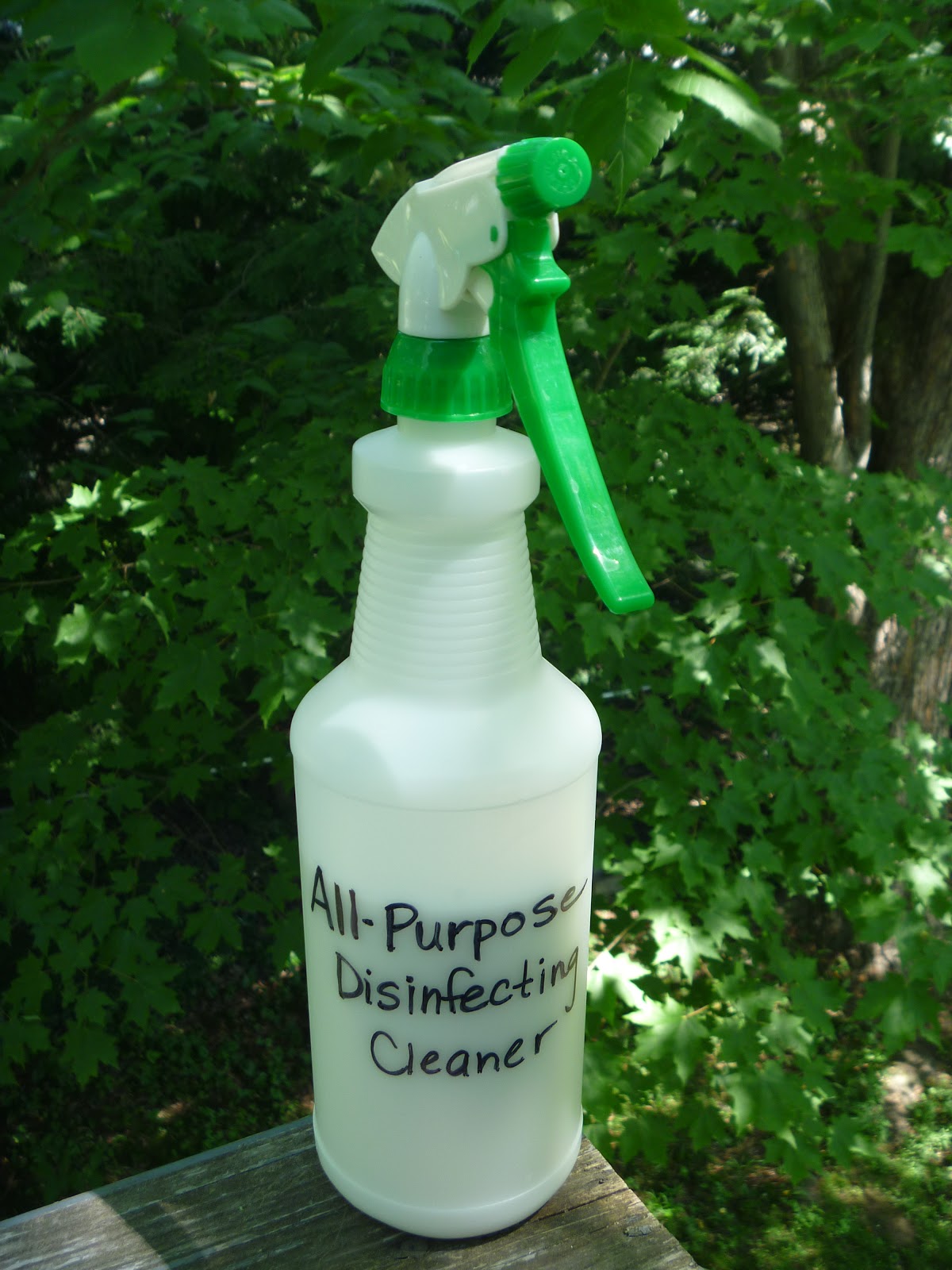
All-Purpose Cleaner with Love

I don't even remember when I started using nontoxic cleaners.  I was using them unconsciously as I grew up as my mother used them.  She may have been using them to save money.  After all, she had five kids to raise, and a gallon of vinegar is a lot cheaper than a manufactured product.

When you make your own cleaners, you should always start with a clean container.  If it's a previously used container, make sure you don't have residue from the previous contents still in the container when you put it to reuse.  Clearly mark your container so you don't confuse it with something else.  Just take a sharpie, permanent maker and write on the container.

For my all-purpose disinfecting cleaner, I use a spray bottle that can be purchased in the gardening section of many stores.  The nozzle is adjustable to regulate a misting spray to a straight shot.

I have been cleaning my apartments with a nontoxic, home-made cleaner for many years.  It's very simple and the recipe follows:

All-Purpose Disinfecting Cleaner
1 tablespoon liquid soap
1 cup warm water
2/3 cup white vinegar

In a spray bottle, mix the soap and water first to prevent clumping.  Then add the vinegar and mix gently. 

Why Use a Home-Made Cleaner?

When you make your own cleaner, you really, really know what's in it.  When you buy a cleaner, you can't be sure all of the ingredients are listed.  The U.S.  EPA gives a warning about commercial all-purpose cleaners:

       When using [commercial] all purpose cleaners, follow these safety steps:

  • Wear rubber gloves to protect your skin
  • Be sure that there is good air circulation in the room. Open several windows or keep a fan running.
  • NEVER mix two cleaners of different kinds together, especially if one contains ammonia and the other contains chlorine. This can produce a gas called chloramine, and breathing its fumes could be fatal.
You could buy a commercial cleaner containing bleach to kill germs, but white vinegar also kills germs.  So, why pay more for a cleaner that can harm you?  Just make your own.


Thursday, November 15, 2012

Just a Few (of the many) Things I Didn't Know

I live on the border of New Hampshire and Vermont where there are several e-mail list serves to connect residents who have lost a dog, want to sell a dresser, or share whatever information they choose.  After seeing an e-mail from someone saying, "Dishwasher Now Runs Clean: Want to THANK whoever it was that suggested putting a 1/2 cup of white vinegar sitting on the top shelf in the dishwasher.  That has made all the difference in the world!   I now buy the vinegar by the gallon."

I actually never saw the original e-mail and I've never owned a dishwasher, but it was gratifying to read that vinegar once again had saved the day in someone's home.  Less money, less toxic output.

I then decided to see what else people in my area know about nontoxic cleaners, so I put out this notice on three local list serves:  "If you have any recipes or experiences with nontoxic cleaning, I'd love to hear them."

Well, I received many responses.  Most were ones that are already addressed on this blog either in the posts or on the Recipes page.  But again, it was great to hear that other people are using simple, nontoxic recipes to clean their homes.

There were a few recipes I had never heard before--and I'm sharing them below.

Weed and Grass Killer

"Pour straight white vinegar on the weeds to get to the roots, but don't get it on anything you want to keep."

I sent out an e-mail to a group in a Household Hazardous Waste Committee and received a confirming response that vinegar actually kills weeds!  My friend, Joanne said she had her granddaughter spray a section of weeds growing up in her gravel driveway.  They had to do it twice as the weeds were thick and well established, but she lives on a lake so it's great she found a non-toxic way to kill weeds.

Photo Credit Link

Fruit Fly Trap

"Put about an inch of apple cider vinegar into a small jar with a little water and a drop or two of liquid dish washing liquid.  The fruit flies will be attracted and drown in the liquid...you'll have to dump it out and make a fresh batch every now and then if you have a lot of fruit flies."

I'm not sure what the point of the dish washing liquid is, but who can argue with success.  Personally, I just use my kitchen compost can and put the lid on it to trap the fruit flies.

Tub and Sink Cleaner

"A mixture of Borax and Dr. Bronner's Sal Suds is very effective, good smelling, and makes everything shine."